Species 1
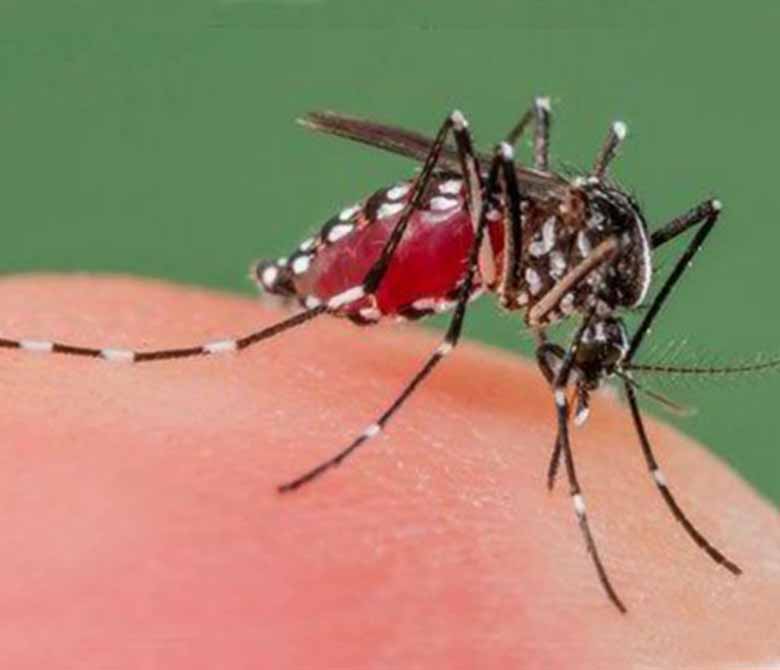
Mosquitoes
- Adults 1/8 – 3/8" long.
- Body and legs covered with scales.
- Mostly gray to dark, some marked with white, silver, green or iridescent blue scales.
- Head with long beak; antennae 15-segmented, feathery in male, hairy in female.
- Two pairs of long, narrow wings with scales along veins and margin.
- Habitat outdoors: ponds, lakes, leaves of plants, tree holes, etc.
- Eggs deposited on water, in rafts on water, or on moist soils near water.
- Immature mosquitoes (egg, larva, pupa) cannot breathe underwater.
- Prefer stagnant water when depositing eggs.
- Feed at dawn and dusk on the blood of animals or humans.
- Locate food sources using their antennae to detect carbon dioxide.
Mosquito control
- Eliminate high-producing areas via habitat modification — reduce resting areas and prevent stagnant water.
- Use properly labeled pesticide applications.
- Treat under and at the roots of bushes and shrubs where moisture collects.
- Treat under low-lying trees around the perimeter of the home to build a protective barrier.
Species 2
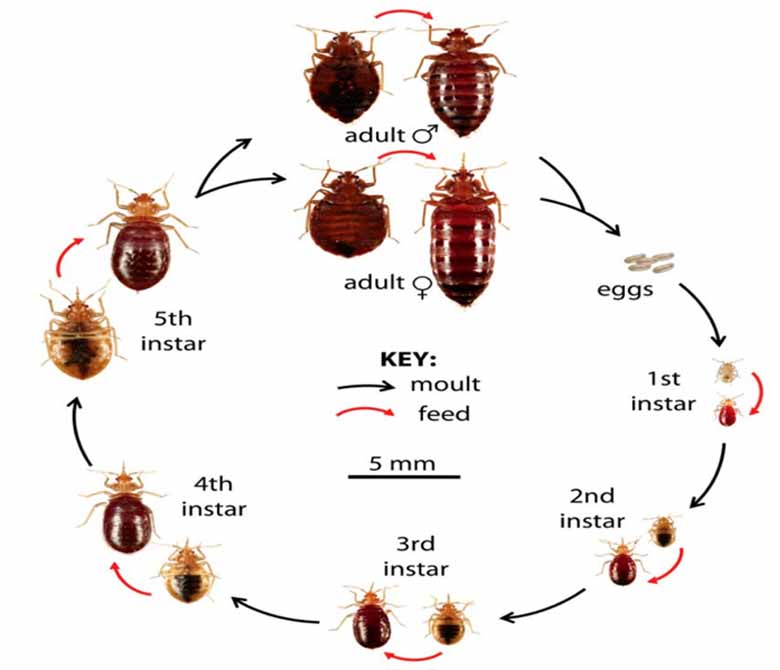
Bed Bugs
- Adults about 4 to 5 mm long (size of an apple seed).
- Broadly oval and flattened body that is wingless.
- Brown to reddish brown (after feeding).
- Antenna 4-segmented; 3rd segment longer than 2nd and 4th.
- Nymphs are white just after molting, then light tan before feeding.
- Go through 5 instar development stages before becoming an adult.
- Preferred hosts are humans; feed on bare skin while you sleep.
- Have been known to survive up to a year without a meal.
- Females lay 1-5 eggs per day; 200-500 eggs per year.
- Eggs found in cracks or white surfaces, secured with a transparent cement.
- Hitchhikers — easily transported on humans, furniture or belongings.
- Found in box springs, bedding, dressers, picture frames and almost anywhere.
Bed bug control
- Inspect thoroughly — look for fecal matter, blood stains and eggs.
- Vacuum carpet, bedding, drapery and furniture to loosen eggs in hard-to-reach places.
- High heat or dry cleaning of clothes, bedding and drapery is key to treatment.
- Treat framework of couches and beds, under baseboards, the tack-strip area under carpets, and voids including outlet boxes.
- Do not treat any areas of the bed or couch where humans contact directly.
- Aerosols and liquids are best; dusts are better for hard-to-reach places like outlets.
- Customers must follow the bed bug preparation checklist for treatment to be thoroughly effective.
Species 3
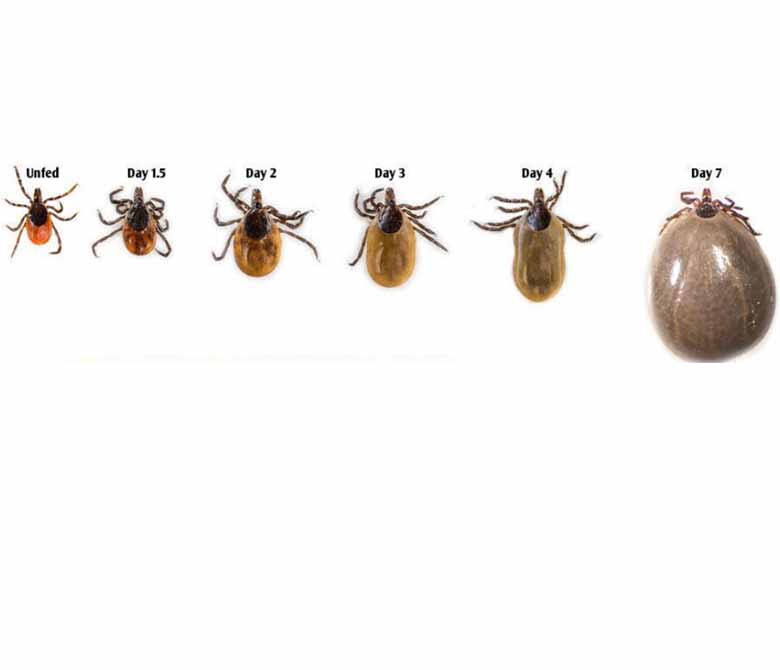
Ticks
- Unengorged adult female about 3/16" long; male slightly smaller, 1/8".
- Body oval, dorsoventrally flattened (top to bottom).
- Brown with whitish to grayish markings, often with a silver hue on the dorsal shield.
- Both larvae (6 legs) and nymph (8 legs) with red markings near eyes and lacking white on the dorsal shield.
- Feed on blood of animals and humans.
- Don't usually survive well indoors — usually carried in on a pet.
- Engorged female drops off the host and seeks shelter to lay eggs — 4,000 to 6,500 eggs over 14-32 days, then dies.
- Found outdoors in grassy low vegetation, on wildlife and trees.
Tick control
- Inspect thoroughly.
- Keep grass cut to 3" or less; trim back vegetation.
- Apply properly labeled pesticide on a perimeter treatment, paying attention to roots of bushes, shrubs and low-lying trees.
Species 4
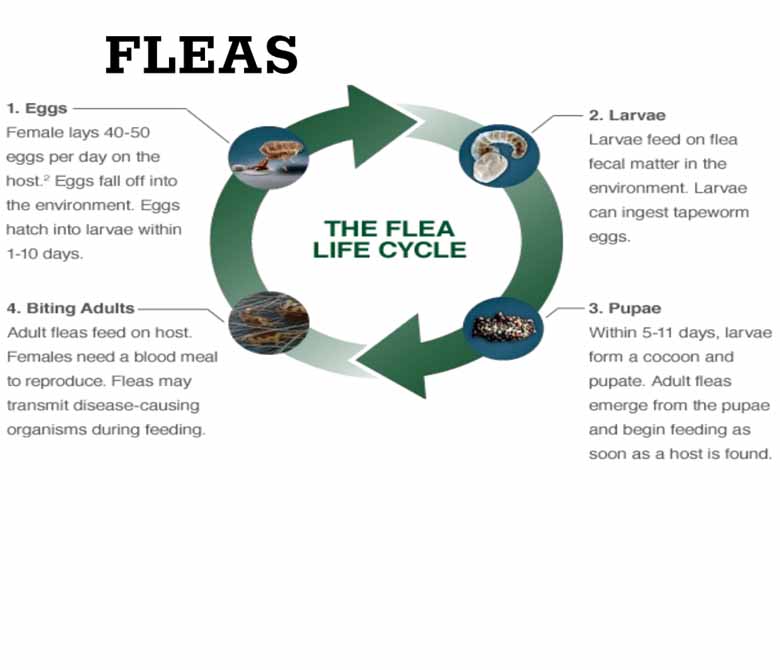
Fleas
- Adults about 2.5 mm long.
- Body flattened side to side; wingless.
- Brownish black to black, but reddish black when full of blood.
- Compound eyes well developed; femur of hind leg with 10-13 bristles on inner side.
- Short antennae.
- Mature larvae about 1/8 – 1/4" long; whitish, slender, eyeless and legless.
- Females lay 4-8 eggs after each blood meal — 400-500 during their lifetime.
- Eggs deposited on or between hairs or in nest/bedding material; oval, whitish, about 1/64" long, hatch in 1-12 days.
- Hitchhikers that jump about 6" vertically.
- Found where animals sleep and along travel paths — high moisture areas.
- Prefer hairy animals: dogs, cats, rabbits, squirrels, rats, mice and other domesticated or wild animals.
Flea control
- Inspect highly concentrated areas with activity.
- Treat cracks and crevices and under large furniture; mist over carpeted areas and under pet bedding; allow to dry before vacuuming.
- If pets have fleas at the time of treatment, the pet owner must arrange for the pet to be treated at the same time.
- Outside, prevent wildlife from entering the structure, trim vegetation and eliminate water sources.
- Use appropriately labeled pesticide and a light-stable IGR.
- Treat shaded resting areas — next to the structure, foundation, porch, under bushes or low-lying trees.
Reclaim your yard, your sleep, and your sanity
From mosquito barriers to bed bug treatments, we've got the right tool for the job.
Get a quote